AI-Generated Music and Copyright in 2026 — What Creators Need to Know
Who owns AI-generated music in 2026? We break down the copyright landscape, major label lawsuits, Content ID realities, and why AutoMusic's royalty-free policy covers all users — including the free tier.
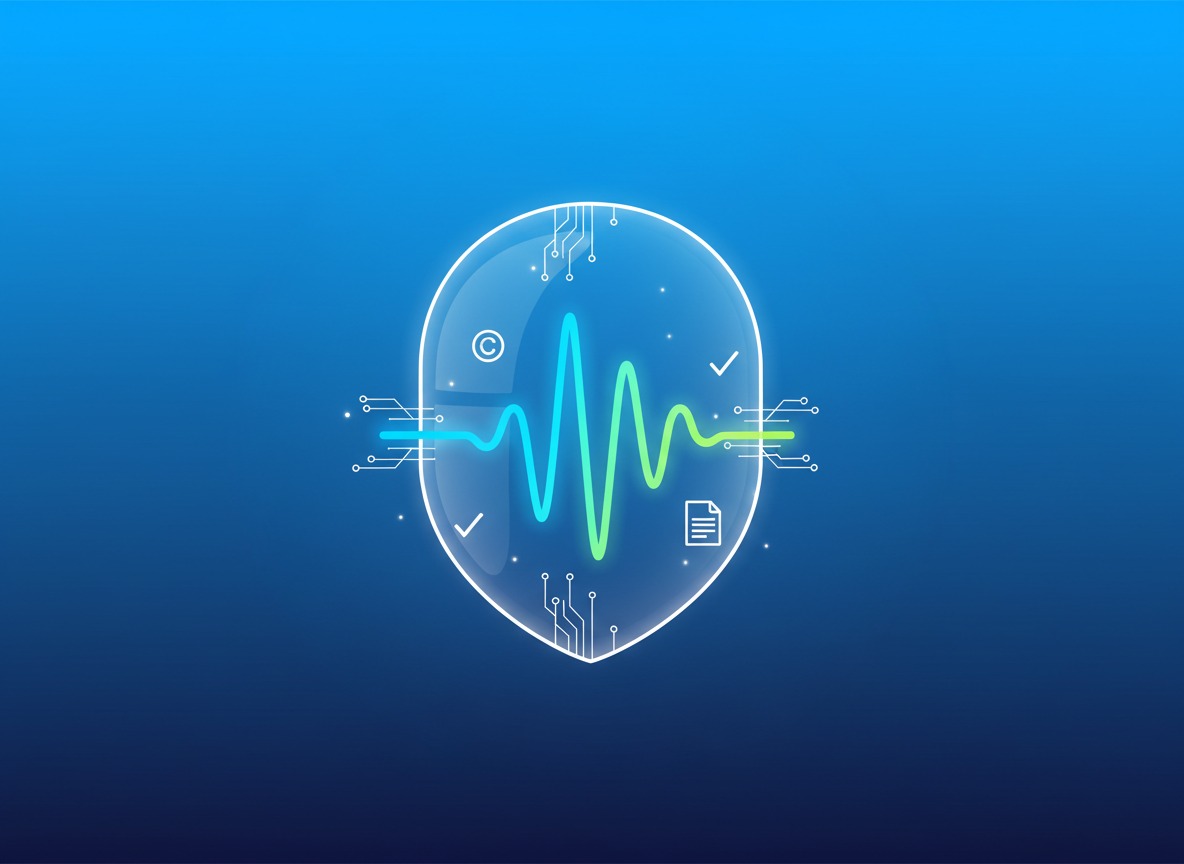
You've heard the advice: use AI-generated music, it's royalty-free, no copyright issues. But is that actually true? And if so, why? What's the legal basis? What are the limits? And what can go wrong if you pick the wrong platform?
These are fair questions. Copyright law is genuinely complicated, the AI music industry is moving fast, and a lot of the "it's all fine" advice floating around online is either oversimplified or outdated.
This article gives you a grounded, honest breakdown of where AI music copyright law actually stands in 2026 — what's settled, what's still being fought in courts, and what you need to look out for as a content creator who wants to use AI music without legal headaches.
No legal advice here — I'm not a lawyer, and nothing in this article should be treated as such. But I can walk you through the state of play clearly enough that you know what questions to ask and what risks to manage.
The Core Question: Can AI-Generated Music Be Copyrighted?
This is where everything starts. In most major jurisdictions, copyright protection requires human authorship. A photograph taken by a camera trap with no human involvement isn't automatically copyrightable. A piece of music generated entirely by an algorithm, without creative human input, is in legal gray territory — and courts have been moving toward: not automatically copyrightable by the AI's creator.
The US Copyright Office has been consistent on this point since 2023: works created entirely by AI without human creative input are not eligible for copyright protection. They've granted copyright on AI-assisted works where humans made meaningful creative choices — but the key word is "meaningful."
What does this mean practically? It means music generated by an AI platform, using a text prompt, with no further human arrangement or selection, sits in a zone where:
- The user who typed the prompt has a weak-to-nonexistent copyright claim under current interpretations
- The AI company doesn't hold copyright over the outputs
- The music arguably falls into the public domain — or into a copyright vacuum where nobody holds exclusive rights
For most content creators, this is actually good news. If nobody holds copyright over the output, nobody can claim it against you. There's no one to send you a takedown notice, no Content ID match against a registered work, no licensing fee to pay.
But — and this matters — the situation differs platform by platform based on their terms of service, and it's actively evolving in courts.
The Major Lawsuits: What's Actually Being Contested
The legal battles around AI music aren't primarily about output copyright (who owns the song the AI made). They're mostly about training copyright (whether AI companies had the right to train their models on copyrighted music in the first place).
The Label Lawsuits Against Suno and Udio
In 2024, the Recording Industry Association of America (RIAA), representing major labels including Sony Music, Universal Music Group, and Warner Music Group, filed copyright infringement lawsuits against both Suno and Udio. The core allegation: these companies trained their AI models on copyrighted recordings without licensing them.
As of mid-2026, these cases are still working through the courts. Udio reached a settlement with Warner Music Group that included undisclosed licensing terms — which is why you'll see Udio listed as having "major label partnerships." Suno's case is ongoing.
What does this mean for you as a user of these platforms? The training-data lawsuits don't directly affect whether you can use the output of these tools. But they do create uncertainty:
- If a platform loses a training-data case badly, it might be forced to shut down or change its model in ways that affect output quality or availability
- A settlement that includes royalty payments to labels could get passed on to users through pricing changes
- Some platforms might respond to legal pressure by restricting commercial use rights for users
The more stable situation: platforms that have already resolved these questions (through licensing or settlement) are safer bets for long-term commercial use.
The Human Authorship Cases
Separately from the training lawsuits, there are ongoing cases testing whether AI-generated content can be copyrighted at all. The Thaler v. Vidal case (involving AI-generated patents, not music) established important precedent that AI cannot be named as an inventor or author. Music-specific cases have been slower to develop, but the direction is consistent: courts are not extending copyright protection to pure AI output.
Platform Policies: Where the Real Risk Lives
Here's what most creators don't read carefully enough: the terms of service of whichever AI music platform they're using. The legal question of whether AI music is copyrightable is separate from the contractual question of what rights you actually have under the platform's terms.
The Commercial Use Problem
Some platforms give full commercial rights to all users. Others tie commercial rights to paid tiers. Others use vague language that's hard to interpret.
The pattern to watch for:
Clear and safe: "All generated content is royalty-free for all users, including commercial use." No plan restrictions, no asterisks, no revenue thresholds.
Ambiguous and risky: "Free-tier users may use generated content for personal, non-commercial purposes. Commercial use requires a paid subscription." This means if you use a free-tier track in a monetized YouTube video and you haven't read the fine print — you may be violating the platform's terms, even if copyright law itself doesn't stop you.
Potentially problematic: Revenue share models where the platform retains some rights to your generated tracks. This exists primarily with platforms that also handle distribution (getting music onto Spotify, Apple Music, etc.). Read carefully before generating anything you plan to release commercially.
AutoMusic's policy is explicit, and it applies regardless of which plan you're on: everything you generate is royalty-free for commercial use. Free users receive 6 credits renewed daily — enough for around 2 full song generations per day — and those tracks carry exactly the same commercial rights as anything generated on a paid plan. There is no licensing upgrade to buy, no commercial tier to unlock. The royalty-free status is unconditional from day one.
This matters particularly for smaller creators and anyone just starting out. You don't need to commit to a subscription before knowing whether the platform works for your use case — you can generate tracks on the free tier, use them in monetized content, and only upgrade later if you need more generation volume.
The "No Copyright" YouTube Channel Problem (Again)
This isn't specific to AI music, but it's worth repeating: some "royalty-free" or "no copyright" music uploaded to YouTube by third parties is not what it claims to be. People upload tracks they don't have rights to, label them as royalty-free, and then either claim against your video later or simply leave a trap that Content ID catches when the real rights holder registers the recording.
AI music generated on a legitimate platform sidesteps this entirely. You didn't download it from a YouTube channel. You created it. There's no ambiguous chain of rights from an unknown uploader. The provenance is clear.
Content ID: Will YouTube Flag AI Music?
This is the most practical concern for most creators, so let's be direct about how it works.
YouTube's Content ID system works by comparing uploaded audio against a database of registered copyrighted works. When a rights holder (a record label, a distributor, a publishing company) registers a recording with Content ID, YouTube's system can detect it in any video upload and trigger a claim.
AI-generated music from AutoMusic is not registered with Content ID — because there's no rights holder registering it. It doesn't match any existing recording, because it was generated fresh the moment you hit Generate. There's nothing in the database to match against.
This is especially true of AutoMusic's V2.0 model, which produces output at a higher level of audio complexity and originality than the standard V1.0 model. The synthesis process generates new compositions from scratch — it isn't recombining or remixing existing audio in ways that would produce sonic fingerprints similar to registered works. What comes out is acoustically novel, because it has never existed before.
The scenario where AI music could trigger a Content ID claim is this: if an AI platform were generating music that was essentially a close copy of existing registered recordings, a similarity match might catch it. Modern AI music generation doesn't work this way — it produces original compositions, not reproductions.
One legitimate edge case: Some AI music platforms have started registering their own generated outputs in Content ID databases. This means if another user generates a track that's similar to one you generated, and they register it first, you could theoretically receive a claim from the platform itself. This is a known practice among some distribution-focused platforms. Check whether your platform does this — and if so, whether they have policies protecting you from being claimed against for your own generations.
AutoMusic does not register generated outputs into Content ID systems, so this scenario doesn't apply.
Practical Rules for Staying Safe in 2026
Based on where things stand, here's a working framework for content creators:
Rule 1: Know your platform's commercial use policy before you create anything monetized. Don't assume. Find the relevant section of the terms of service and read it. The question you want answered: "Can I use free-tier generated content in monetized YouTube videos without upgrading to a paid plan?" With AutoMusic, the answer is yes. With other platforms, check carefully.
Rule 2: Prefer platforms that have resolved their training-data questions. Platforms actively in litigation face more uncertainty. A forced shutdown or sudden policy change mid-lawsuit could affect your ability to use tracks you've already published in ongoing videos. Platforms that have licensed their training data or settled disputes are more stable.
Rule 3: Keep records of what you generated and when. If a dispute ever arises, being able to show "I generated this on [date] using [platform]" is far better than having no documentation. AutoMusic includes generation timestamps in your account history — for any commercially important project, save that reference.
Rule 4: Don't use AI music that you downloaded from third-party sources. Generate it yourself, directly on the platform. Third-party redistribution of "AI music" has the same risks as any other unverified music source.
Rule 5: When in doubt, err toward platforms with clearer policies. Vague terms of service are a risk signal. "It's probably fine" is not a legal defense. If a platform's rights policy requires three paragraphs of interpretation to understand, that's a red flag.
What's Coming: The Regulatory Horizon
Several regulatory developments are in motion that could affect the AI music copyright landscape in the next 12-18 months:
The EU AI Act (effective 2025-2026) includes transparency requirements around AI training data. Platforms that trained on copyrighted material without disclosure may face regulatory action in Europe, separate from US copyright litigation.
US Copyright Office Guidance — The USCO has signaled further guidance specifically on AI music and sound recordings is forthcoming. The direction appears to be toward requiring "meaningful human creative contribution" for copyright registration — which would confirm that pure AI-generated output remains unprotectable, while AI-assisted works with genuine human curation may qualify.
Streaming Platform Policies — Spotify, Apple Music, and others are continuing to refine their policies on AI-generated content. For creators distributing AI music to streaming platforms, watching these policies closely matters. For YouTube creators using AI music as background, this is less relevant.
The general trajectory: AI music as a category is becoming more legally defined, not less. The current uncertainty will resolve toward clearer rules — but the current moment still requires some care.
Frequently Asked Questions
If AI music isn't copyrightable, does that mean anyone can steal my AI songs?
Technically, under current interpretations, pure AI-generated music with no meaningful human creative input may not be protectable by copyright. However, this cuts both ways — no one can claim against you either. If you add substantial creative input (curating from many outputs, editing, mixing, adding your own vocal performance), your creative contribution may be separately protectable. This is an evolving area.
Can I register AI-generated music with a PRO (ASCAP, BMI)?
Performance rights organizations have varying policies, and they're adapting. Generally, for works to qualify for royalty collection, they require human authorship. If you use AI music as a background track without any claim to composition credit, PRO registration isn't relevant. If you're trying to collect royalties as a songwriter on AI-assisted work, this gets complicated — consult a music attorney.
What about sampling? Can I use AI music that sounds like a real artist?
This is a separate risk. Even if an AI-generated track is technically original (not a direct copy), if it closely mimics a specific artist's style in a way that could confuse listeners or imply endorsement, you may face right-of-publicity issues or unfair competition claims — separate from copyright. Generate general-style music ("90s pop" or "blues rock") rather than "in the exact style of [specific artist]."
Does all this change if I'm using AI music for something other than YouTube?
The principles are the same whether you're using AI music in a YouTube video, a podcast, a commercial, a game, or any other project. The relevant questions are always: (1) What does my platform's TOS allow? (2) Has this platform resolved its training-data questions? (3) Is the output entering any database that could match against my use later?
The copyright landscape for AI music is genuinely more favorable for creators than traditional music licensing — but it requires choosing platforms with clear policies and understanding what you're actually agreeing to.
If you want music that's unambiguously royalty-free for commercial use — generated fresh for your specific project, not registered in any Content ID database, and fully usable from the free tier — that's what AutoMusic is built for.
For a comparison of how different AI music platforms handle commercial licensing, see our AI song maker comparison for 2026.
Note: This article reflects publicly available information about copyright law and platform policies as of mid-2026. Copyright law is evolving rapidly in relation to AI. Nothing in this article constitutes legal advice — consult a qualified attorney for advice specific to your situation.
Related articles
10 Ways to Make Your AI Songs Sound Less Like AI
AI music sounds too clinical? These 10 techniques cover everything from style prompting to AutoMusic's V1/V2 model strategy and stem separation — so your tracks feel like real productions.
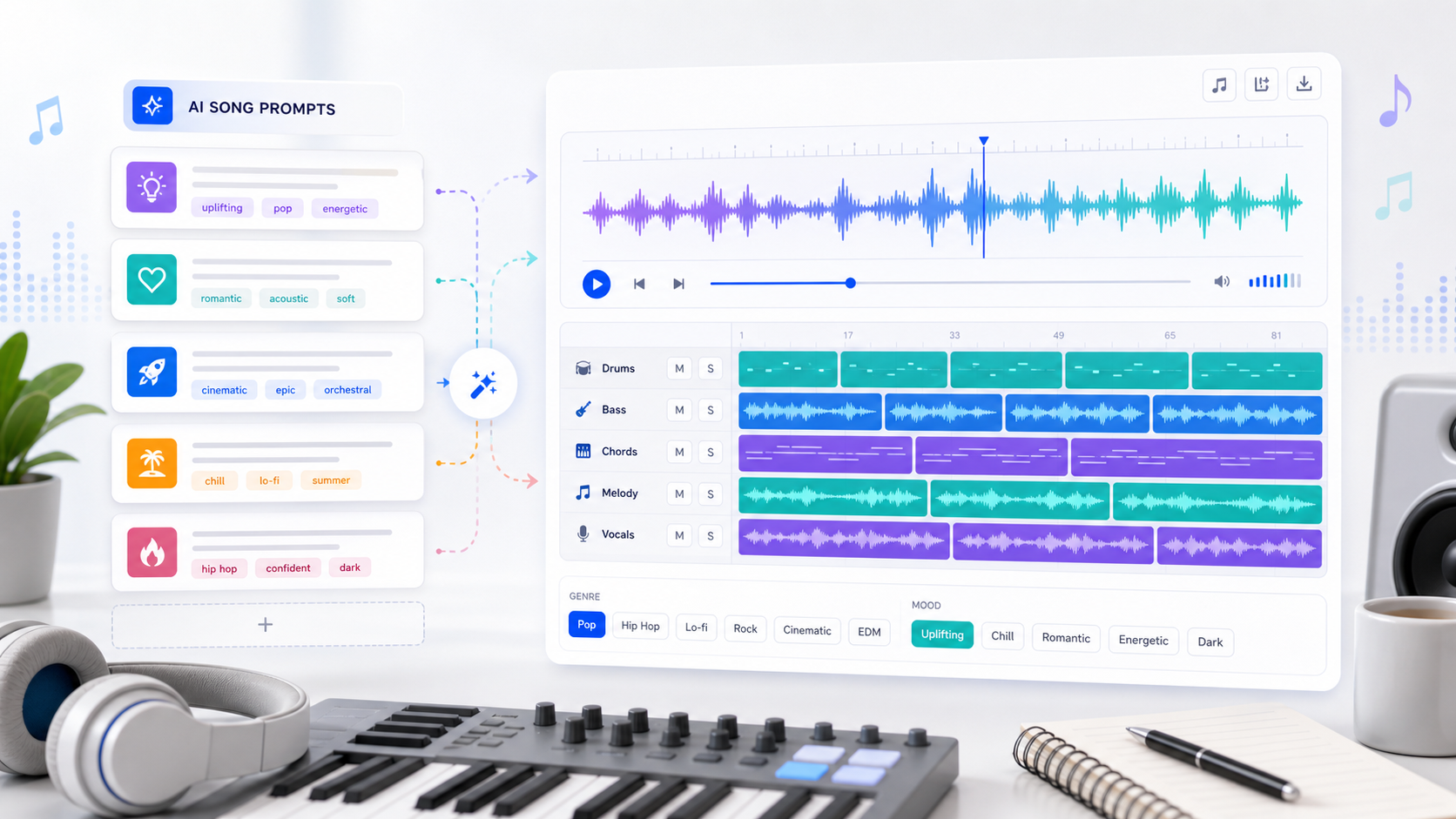
AI Song Prompts That Work — 25 Examples for Better Results
Learn how to write better AI song prompts with 25 practical examples for pop, rap, acoustic, EDM, podcast intros, YouTube background music, and more.
AI Music for Podcasts — Create Intros, Outros, and Background Music
Create professional podcast intro music, outros, and background tracks with AI. No music skills needed. Get a unique sound for your show in minutes.